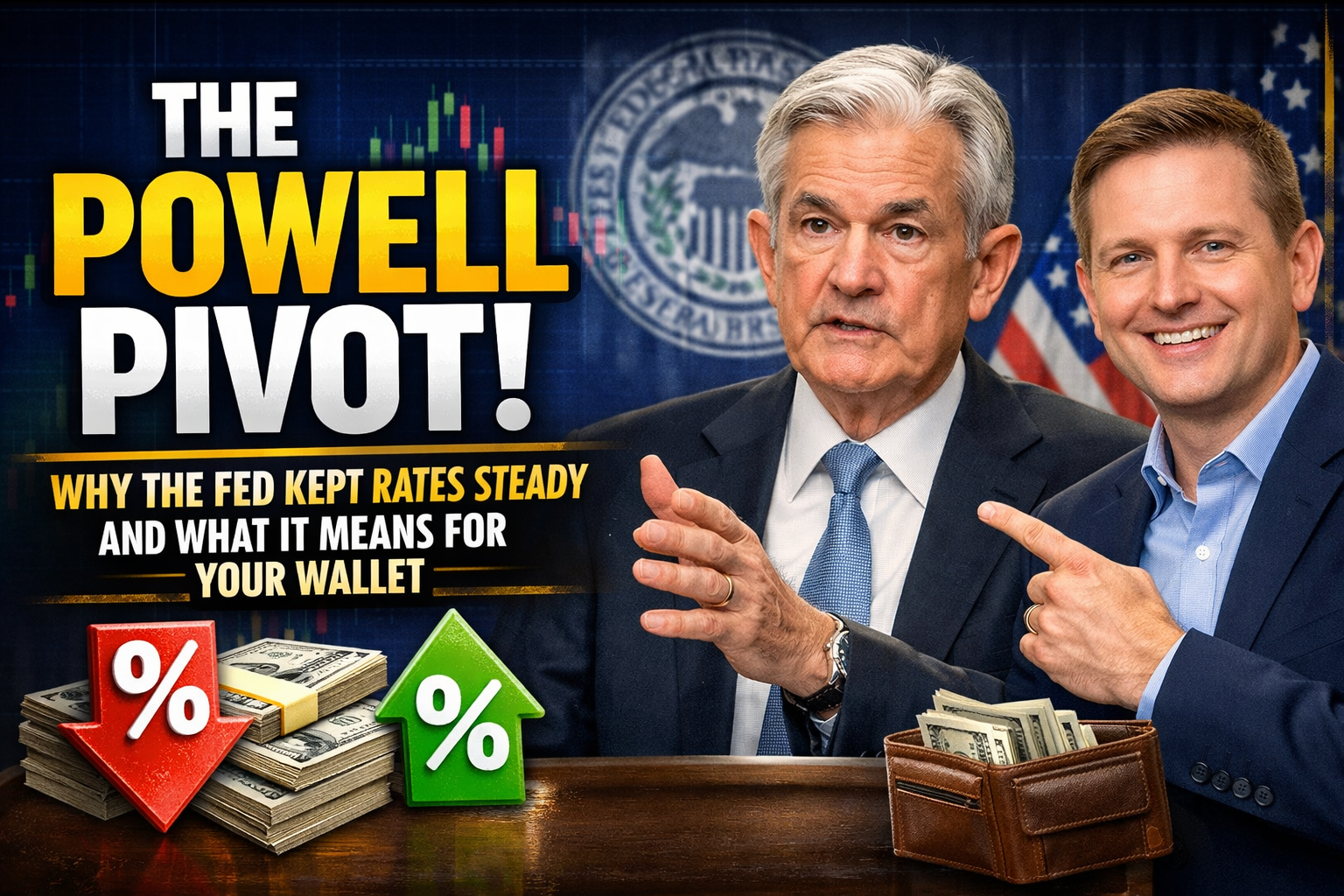
The Powell Pivot: Why the Fed Kept Rates Steady and What It Means for Your Wallet
The Powell Pivot. The financial world stood still today as Federal Reserve Chairman Jerome Powell took the stage to explain the central bank’s latest policy decision. In a move that was widely anticipated but remains highly consequential, the Fed decided to keep interest rates unchanged.
While the “pause” was expected, Powell’s commentary provided a crucial roadmap for the stock market, the housing sector, and everyday consumers. From the skyrocketing cost of car loans to the stagnant mortgage market, this speech touched every corner of the American economy.
[NVIDIA Q4 Financial Results: Mark Your Calendars for the Big Reveal!]
The Core Decision: Stability Over Aggression
The Federal Open Market Committee (FOMC) decided to keep the federal funds rate at its present range. Powell stated that inflation will reach the correct level at the present time while work remains to be done. The Federal Reserve will maintain its interest rates until they achieve their primary goal of 2 percent inflation control.
Key Takeaways from Powell’s Speech:
- Inflation Resilience: Inflation has cooled but remains above the desired target.
- Labor Market Strength: The job market continues to defy expectations, giving the Fed room to keep rates high without triggering a massive recession.
- The “Wait and See” Approach: Future decisions will remain “data-dependent,” meaning the Fed will look at month-to-month reports before deciding on a cut.
Impact Analysis: How the Fed Decision Affects You
| Financial Sector | Immediate Impact | Future Outlook |
|---|---|---|
| Mortgage Rates | Remain near 20-year highs, making home buying expensive. | Will likely stay flat until the first official rate cut. |
| Car Loans | Monthly payments remain high due to elevated interest. | Refinancing opportunities will be limited in the short term. |
| Stock Market | Volatility in tech and growth stocks as they price in “higher for longer.” | Markets are looking for hints of a Q3 or Q4 rate cut. |
| Savings Accounts | High-yield savings accounts (HYSA) continue to offer 4-5% returns. | Great time for savers to lock in high-interest certificates of deposit (CDs). |
The Market Reaction: Stocks vs. Bonds
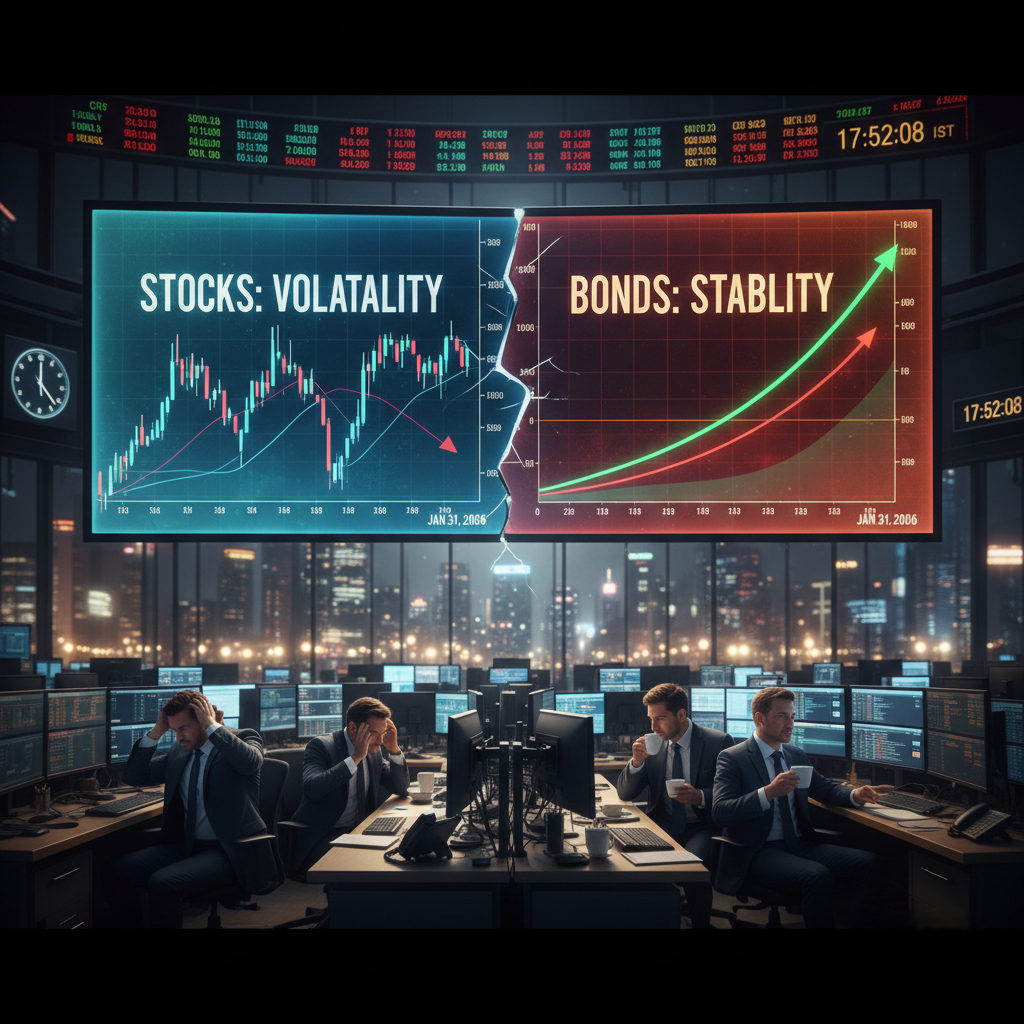
Immediately following the speech, the S&P 500 and Nasdaq saw minor fluctuations. Investors are currently in a “tug-of-war” between the relief that rates aren’t going higher and the frustration that they aren’t coming down yet. Powell’s insistence that the Fed is not “rushing” to cut rates suggests that the era of “easy money” is not returning anytime soon.
[2026 Grammy Predictions: Will Kendrick Lamar & Lady Gaga Sweep the Night?]
Economic Indicators Summary
| Metric | Current Status | Fed Goal | Status |
|---|---|---|---|
| Inflation (CPI) | ~3.1% – 3.4% | 2.0% | Above Target |
| Interest Rates | 5.25% – 5.50% | Neutral (~2.5%) | Restrictive |
| Unemployment | 3.8% – 4.0% | 4.1% | Healthy |
Visualizing the Path: The “Higher for Longer” Chart
Federal Funds Rate Projection (2024-2026)
  Rate (%)
    ^
6% -|          __________ (Present: Rates Held Steady)
    |         /          \
5% -|________/            \__________
    |                                \
4% -|                                 \_________ (Projected Cut Late 2025)
    |
3% -|
    |_________________________________________________> Time
      2023        2024        2025        2026
Note: This represents the Fed’s ‘Dot Plot’ sentiment of a gradual decline.
Summary and Expert Verdict
Jerome Powell has successfully walked the tightrope once again. By not cutting rates, he has prevented the economy from overheating, but by not raising them, he has signaled that the worst of the inflation battle may be behind us.
For the average consumer, the message is clear: Wait. If you are looking to buy a home or a new car, the next 6 to 12 months will be critical as the market waits for the first sign of a rate reduction.
FAQ: Quick Questions on the Fed Speech
Q1. Why didn’t the Fed cut rates today?
A. The Fed believes the economy is still too strong and inflation is slightly too high. Cutting rates now could cause inflation to bounce back.
Q2. When will mortgage rates go down?
A. Mortgage rates usually follow the 10-year Treasury yield. They will only drop significantly once the Fed officially announces a rate cut, likely later this year or early next.
Q3. Is a recession still possible?
A. Powell mentioned that a “soft landing” is the goal, but high interest rates always carry a risk of slowing the economy down too much.
Q4. How does this affect my credit card debt?
A. Since rates remain unchanged, the interest on your credit card balance will remain at its current high level. It is advised to pay down high-interest debt as soon as possible.